I used to think the answer to “which platform should we focus on” was a single name. It isn’t. I’ve run real estate pages across all three platforms for different clients. I’ve watched what actually converts versus what just gets likes. The honest answer is that each platform does a different job. Trying to make one platform do all three jobs is usually why real estate accounts feel busy but don’t bring in leads. Getting this right is exactly what a good real estate digital marketing agency handles. It means matching the platform to the job it’s actually good at, instead of posting the same content everywhere and hoping something sticks.
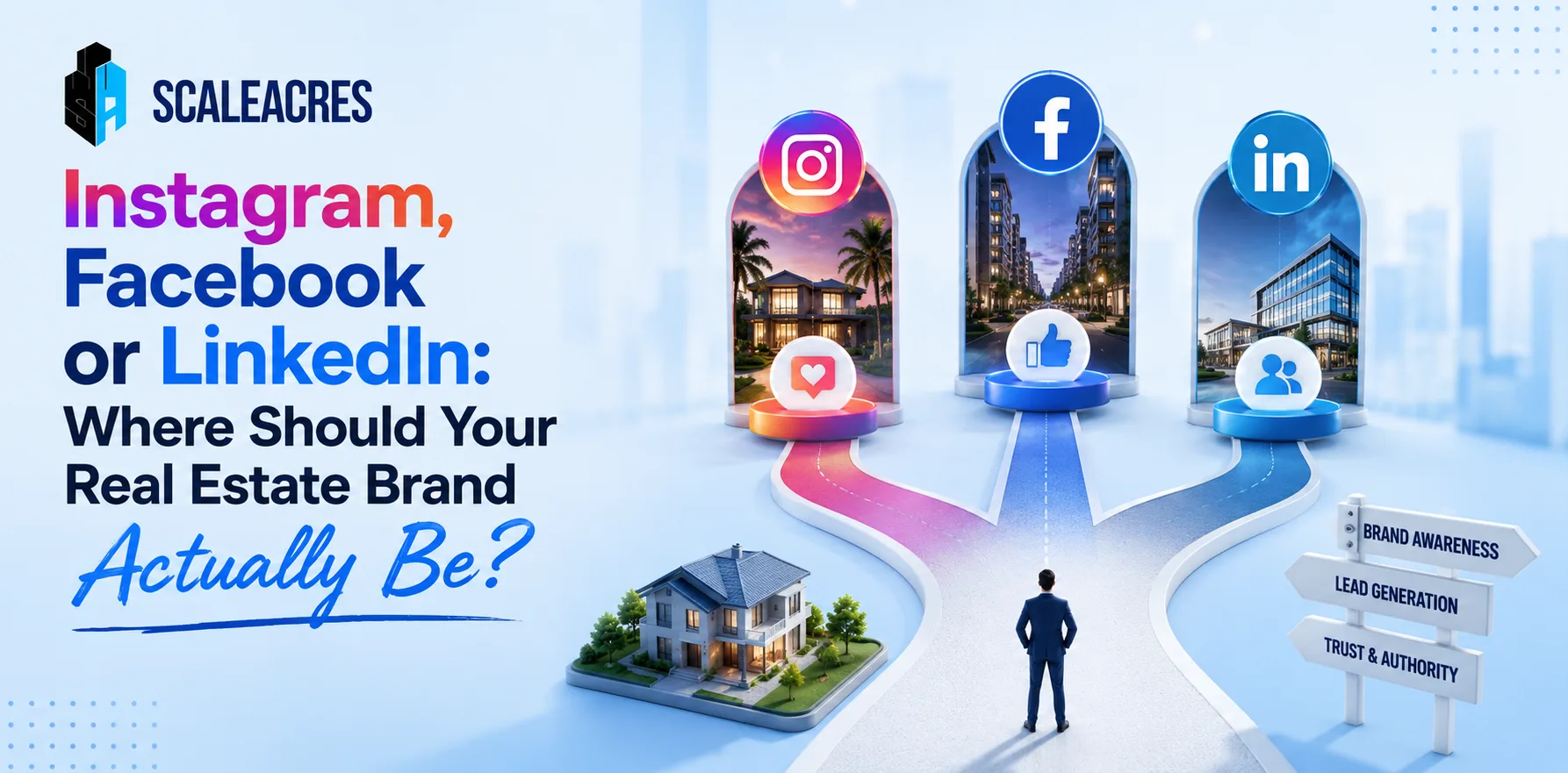
Quick answer: Instagram works best for visual discovery and building an emotional connection to a project. Facebook works best for reaching a slightly older, local audience and running highly targeted lead ads. LinkedIn works best for B2B relationships, investor outreach, and personal branding for agents and developers. Most serious real estate brands need at least two of these, used for different purposes, not one platform doing everything.
Is Instagram Good for Real Estate?
Yes, especially for anything visual — project walkthroughs, drone shots, reels of finished interiors, and behind-the-scenes construction updates. Instagram’s audience skews younger. They respond strongly to short-form video, which makes it a natural fit for showing a property rather than just describing it.
The tradeoff is that Instagram is weaker for direct, detailed conversation. Comments and DMs work, but it’s not built for long explanations about payment plans or legal paperwork. Think of Instagram as the platform where someone falls in love with a project. It’s not necessarily where they get every question answered.
Best for: first impressions, emotional connection, reaching younger first-time buyers, showcasing design and lifestyle.
Is Facebook Still Relevant for Real Estate?
Yes, more than people assume. This is especially true for a slightly older audience — the 35-55 age group that’s often the one actually signing the cheque, even if a younger family member found the listing on Instagram first. Facebook’s ad targeting is still genuinely strong for local, interest-based, and lookalike audiences. That makes it a reliable platform for lead generation campaigns, not just organic posts.
Facebook Groups also matter here in a way the other two platforms don’t really replicate. Local community groups, resident groups for nearby societies, and buyer-seller groups are places where real estate conversations happen constantly, often without any brand involvement at all. Being present and helpful in these spaces, not just running ads at them, builds a different kind of trust. Facebook’s ad targeting also remains genuinely strong for real estate. Campaigns run through platforms like real estate pay per click advertising often extend the same audience-targeting logic across Google Search alongside Facebook. That gives a project visibility in both places a serious buyer is likely to be looking.
Best for: local reach, paid lead generation, an older buyer demographic, community-level presence.
Is LinkedIn Actually Useful for Real Estate?
For most individual homebuyers, no, not directly. But for a specific and valuable audience, it’s one of the most underused platforms in the industry. LinkedIn works well for reaching investors, NRIs researching from abroad, and corporate HR teams looking for employee housing solutions. It also works for channel partners or brokers who could bring in bulk deals. And it’s the best platform for an individual agent or developer to build a personal, credible professional brand.
A post explaining market trends, a breakdown of RERA compliance, or a founder sharing an honest update about a project delay tends to perform well here. The audience expects substance over polish. This is very different from Instagram, where the same content might feel out of place.
Best for: investor relationships, B2B and channel partnerships, NRI buyers, professional credibility.
A Quick Comparison
| Platform | Best For | Weak For |
|---|---|---|
| Visual discovery, emotional connection, younger buyers | Detailed conversations, older audiences | |
| Local reach, paid lead ads, community groups | Younger audience engagement | |
| Investors, B2B, NRI buyers, personal credibility | Retail homebuyer discovery |
So Which One Should Your Brand Actually Prioritize?
It depends on what you’re selling, and to whom. That’s really the honest answer behind most good social-platform decisions, rather than a single universal answer.
If you’re marketing affordable or mid-range housing to first-time, younger buyers, Instagram deserves the most consistent effort. Facebook can run in parallel, mainly for ad targeting. Premium projects likely to attract investors or NRI buyers call for a different weighting. LinkedIn deserves far more attention than most developers currently give it, even if the engagement volume looks smaller than Instagram’s. And when the audience is genuinely local and slightly older — common in tier-2 cities or established, family-oriented localities — Facebook may deserve the largest share of your effort instead.
A Simple Way to Decide
Ask three questions before assigning your budget and content effort across these platforms:
- Who is actually making the buying decision — a young first-time buyer, a family, or an investor?
- Is the property mid-range, family-oriented, or something more premium and investment-driven?
- Does the sale depend more on emotional connection to the space, or on trust in numbers and credibility?
Younger, emotional, visual decisions lean Instagram. Local, family, price-sensitive decisions lean Facebook. Investment-driven, credibility-based decisions lean LinkedIn. Most brands genuinely need a mix, weighted differently depending on what’s actually being sold.
Frequently Asked Questions
Do I need to be active on all three platforms? Not necessarily all three with equal effort. It’s usually better to be genuinely consistent on two well-matched platforms than spread thin and inconsistent across all three.
Which platform is best for generating the most leads quickly? Facebook’s ad targeting tends to generate leads fastest at scale. Lead quality still depends heavily on how well the campaign and landing page are built.
Is Instagram only useful for luxury projects? No. Instagram works well across most price points, because the format itself — short video and photos — suits any project with something visual worth showing.
Should individual agents use LinkedIn even if their developer doesn’t? Yes. Personal presence on LinkedIn builds an agent’s own credibility, independent of any single project or employer. That matters over a long career.
Final Thoughts
There isn’t a single winning platform in this comparison. Any answer that claims otherwise is oversimplifying a decision that actually depends on your buyer. The real question isn’t which platform is “best” in general. It’s which platform matches the specific person you’re trying to reach, at the stage they’re actually in. Getting that mix right is exactly the kind of ongoing work good social media marketing services are built around. It’s not about picking one platform and sticking with it forever. It’s about adjusting the balance as the audience and the project change over time.