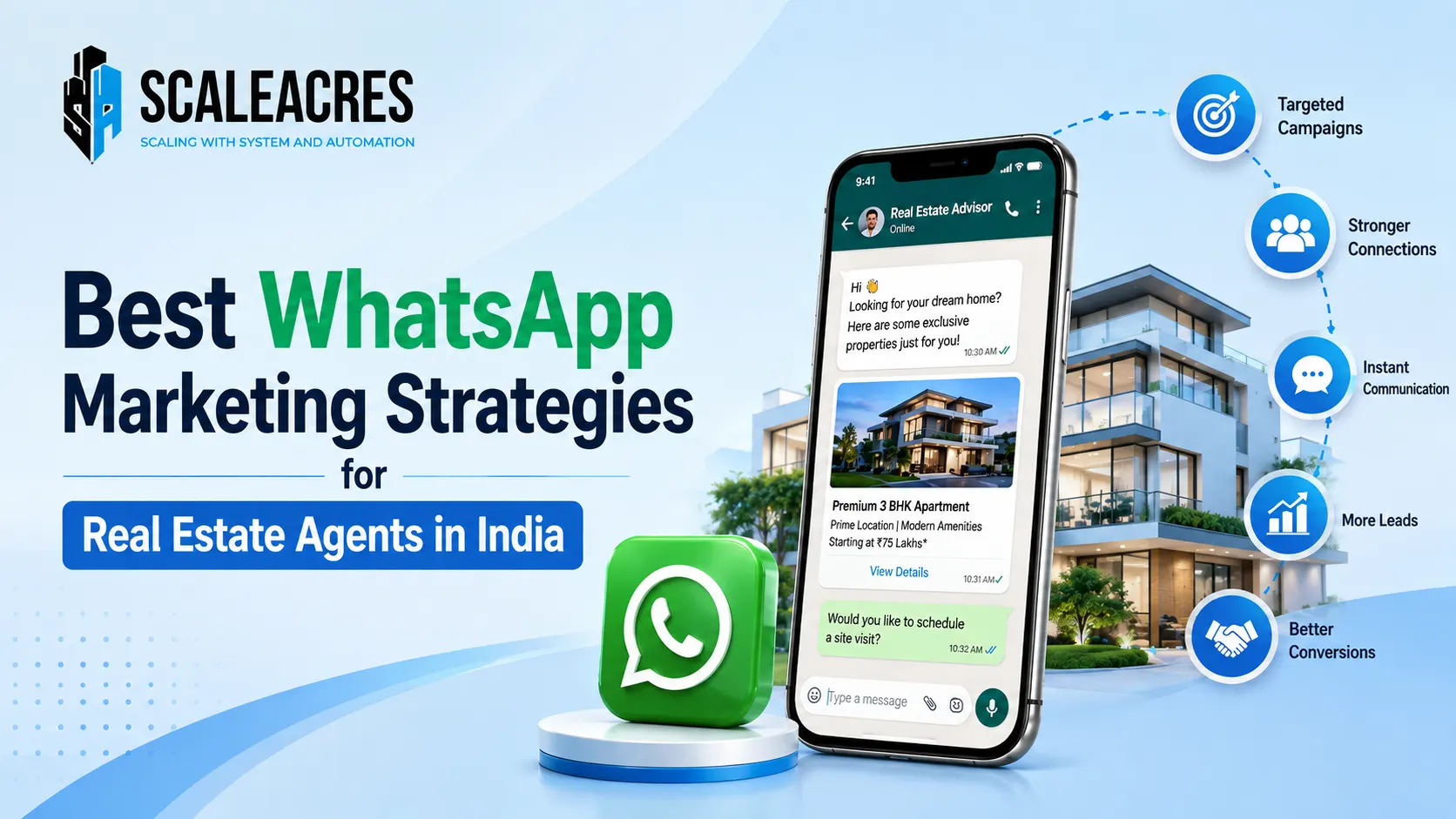
If you’re a real estate agent in India, chances are your day already runs through WhatsApp. A buyer messages you a property link at 11 PM. You send a floor plan the next morning. Someone asks “location kaisi hai” three days after their site visit. WhatsApp isn’t a marketing channel you’re choosing to use — it’s already how your buyers talk to you.
The problem is most agents use it the same way they’d use a phone call: reactive, one-off, no real plan behind it. That’s where a lot of good leads quietly go cold.
This guide walks through how to actually turn WhatsApp into a structured, working part of your real estate digital marketing services — not just a messaging app you happen to check often.
Why WhatsApp Marketing Matters for Real Estate
Real estate is a high-trust, high-consideration purchase. Nobody buys a flat after one ad click. They research, compare, ask questions, disappear for a week, come back. Email gets ignored. Calls get missed. But WhatsApp messages get opened — usually within minutes.
For Indian buyers specifically, WhatsApp already carries a level of personal trust that other channels don’t. It’s where they talk to family, close friends, their kids’ school group. When a builder or agent shows up there with useful, non-pushy information, it doesn’t feel like an ad. It feels like a conversation.
That’s the real advantage: WhatsApp lets you stay present in a buyer’s decision-making process without being intrusive — if you use it right.
WhatsApp Marketing vs Traditional Follow-Up
Compare this to a typical telecalling follow-up: you call, they’re busy, you call again next week, they’ve forgotten half of what you told them. Every conversation starts from scratch.
WhatsApp keeps the entire conversation history in one thread. A buyer can scroll up and see the brochure you sent, the price you quoted, the site visit date you confirmed. It reduces repeated questions and makes your follow-up feel organized instead of pushy. That alone often shortens the gap between inquiry and site visit.
How to Build a WhatsApp Marketing Strategy
Before jumping into templates and automation, get three basics right:
- Choose the right account type. A regular WhatsApp Business app works fine for a solo agent handling a manageable number of leads. Once you’re running paid campaigns and need automation, the WhatsApp Business API becomes worth the setup effort.
- Build your message library upfront. Have ready-to-send assets — project brochures, floor plans, price sheets, location maps, RERA details — so you’re not scrambling every time someone asks.
- Map your funnel stages. A fresh inquiry, someone who’s done a site visit, and someone in price negotiation all need different messages. Treating them the same is where most agents lose leads.
If you’re setting this up for the first time, it helps to read this detailed guide to WhatsApp lead nurturing for real estate, which breaks the setup down step by step.
10 Best WhatsApp Marketing Strategies
1. Use Click-to-WhatsApp Ads
Instead of sending Facebook or Instagram traffic to a landing page form, send it straight into a WhatsApp chat. The buyer skips the form-filling friction and starts talking to you immediately — which usually means a faster, warmer first response. Pairing this with the right real estate lead generation services makes sure every click actually turns into a qualified conversation, not just a chat window opening.
2. Personalize Every Message
“Sir yeh property dekhiye” sent to fifty people at once doesn’t convert. Use the person’s name, mention the specific project they inquired about, and reference their stated budget or preferred location. A message that reads like it was written for one person — because it was — gets replied to far more often than a generic broadcast.
3. Qualify Leads Before You Pitch
Not everyone who messages you is ready to buy this month. A quick set of questions — budget range, preferred location, timeline, ready-to-move or under-construction — tells you where to focus your energy. This also means you’re not sending a 3-crore villa brochure to someone with a 60-lakh budget.
4. Send Relevant Property Information, Not Everything
Resist the urge to forward every new listing to your entire contact list. Match what you send to what the buyer actually asked about. One well-matched property PDF beats ten random ones — and it keeps buyers from muting your number.
5. Have a Real Follow-Up Sequence
Most deals aren’t closed on the first message. Plan out what you’ll send on day 1, day 3, day 7, and day 14 if there’s no response — a gentle check-in, a fresh property update, a limited-time offer reminder. A sequence like this keeps you visible without feeling like you’re chasing.
6. Convert Conversations Into Site Visits
The real goal of most WhatsApp conversations is getting the buyer physically to the property. Make scheduling easy — share available slots directly in chat, send a location pin, confirm the visit a day before, and follow up within a few hours after the visit while it’s still fresh in their mind.
7. Use Voice Notes for a Personal Touch
A 20-second voice note explaining why a particular unit suits their needs often lands better than a paragraph of text. It’s faster for you to send and feels noticeably more human to the buyer.
8. Share Social Proof Naturally
A short video testimonial or a quick message from a past buyer, shared at the right moment, builds confidence in a way that specs and brochures can’t. Keep it brief and relevant to the property they’re considering — don’t turn it into a sales pitch.
9. Respect Timing and Frequency
Sending messages late at night or multiple times a day is the fastest way to get blocked or ignored. Stick to reasonable hours, and space out your messages based on where the buyer is in their decision process — more frequent early on, spaced out as the conversation matures.
10. Automate the Repetitive Parts
Instant replies for common questions, appointment confirmations, and basic FAQ handling can run on automation, freeing you up to focus on the conversations that actually need a human touch — price negotiations, objection handling, closing calls.
Why Trust Matters in WhatsApp Communication
Real estate decisions involve serious money, so buyers are naturally cautious about who they’re talking to. A verified business profile, consistent branding across your messages, and a professional (not overly salesy) tone all quietly build that trust over the course of a conversation. This is part of why real estate branding services matter as much online as they do on a phone call — trust is built long before the first message is sent.
WhatsApp Marketing Mistakes to Avoid
A few habits quietly hurt agents more than they realize:
- Mass broadcasting the same message to your entire contact list regardless of what each person actually asked about
- Ignoring opt-outs and continuing to message people who’ve asked to stop
- No clear next step in messages — every message should nudge toward a site visit, a call, or a decision
- Overloading with images in a single message, which slows loading and gets skipped
- Disappearing after the first response instead of following up with a plan
WhatsApp Compliance for Real Estate in India
This part often gets skipped, but it matters. Messaging someone who hasn’t opted in can fall under TRAI’s unsolicited commercial communication rules, and WhatsApp’s own Business Messaging Policy requires user consent before you send promotional messages. Always collect explicit opt-in — through a website form, a QR code at your office, or a simple “yes, message me on WhatsApp” confirmation — before adding someone to your broadcast list. It protects your number from getting banned and it builds trust with buyers who know they signed up for this.
How WhatsApp Fits Into Your Larger Lead Generation Strategy
WhatsApp works best when it’s not standing alone. Leads coming in from Google Ads, Facebook and Instagram ad management services, or your website should flow directly into WhatsApp for that crucial first response — the moment that often decides whether a lead stays warm or goes cold. If you’re building or refining this pipeline, it’s worth mapping out how each paid channel feeds into WhatsApp so it becomes one connected system, not a separate effort.
FAQs
Is WhatsApp marketing legal for real estate agents in India? Yes, as long as you have consent from the recipient. Sending promotional messages without opt-in can violate TRAI regulations and WhatsApp’s own policies.
Should I use WhatsApp Business app or WhatsApp Business API? The app suits individual agents handling a smaller volume of leads. The API makes more sense once you’re running paid campaigns and need automation or a larger team handling conversations.
How often should I message a lead on WhatsApp? It depends on where they are in the funnel — more frequent in the first week after inquiry, then spacing out over 2-3 weeks if there’s no response, always respecting reasonable hours.
Can WhatsApp replace phone calls entirely? Not entirely. WhatsApp works well for information sharing and light-touch follow-up, but price negotiations and closing conversations often still need a call.
Conclusion
WhatsApp marketing for real estate isn’t about sending more messages — it’s about sending the right message, to the right person, at the right stage of their decision. Get the basics right — consent, personalization, timing, and a clear follow-up plan — and WhatsApp stops being just a messaging app and starts working like a genuine part of your sales process.